Project InnerSpace Publishes Landmark Report on Indonesia's Geothermal Potential
PR Newswire
BOSTON, Dec. 1, 2025
Study reveals that next-generation geothermal energy could meet up to 90% of Indonesia's industrial heat demand and play a pivotal role in achieving national renewable energy goals
BOSTON, Dec. 1, 2025 /PRNewswire/ -- Project InnerSpace today announced the release of The Future of Geothermal in Indonesia, a comprehensive report detailing how, with vast conventional resources and deep domestic expertise, Indonesia can expand geothermal to next-generation systems, industrial heat, and district cooling. Doing so will deliver reliable power, competitive energy for industry and data centers, healthier air for communities, and a world-class domestic supply chain and workforce.
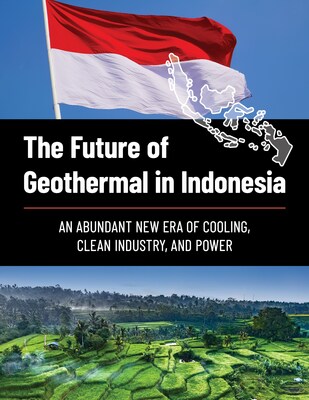
Geothermal energy, the heat naturally occurring in the Earth's crust, is an abundant and ubiquitous source of energy. Advances in drilling and subsurface technologies are making geothermal affordable and scalable in regions once thought impractical. In Indonesia, that progress is especially important. Stretching across thousands of islands along the Pacific Ring of Fire, Indonesia possesses one of the world's richest geothermal resource bases. The report estimates that Indonesia holds 2,160 gigawatts of geothermal technical potential, much higher than current estimates of hydrothermal resources. Fully realizing this potential would allow geothermal energy to meet up to 90% of Indonesia's process-heat demand in key manufacturing sectors and significantly reduce the nation's reliance on coal and imported fuels, leading to over 650,000 jobs.
"Indonesia is already a world leader in hydrothermal geothermal. The country's long oil and gas and geothermal heritage now gives the country the technical skill, drilling capacity, and operational expertise to lead the next phase of the sector: geothermal cooling, industrial heat, and next-generation power," said Jackson Grimes, Director of Global Engagement at Project InnerSpace. "Our analysis shows that by modernizing geothermal regulations and expanding the national focus beyond electricity, Indonesia can unlock thousands of megawatts of firm, low-emissions energy, strengthen industrial competitiveness, and create hundreds of thousands of skilled jobs, while improving energy security and strengthening social acceptance through clearer benefits for communities."
"Next-generation geothermal systems differ in that they do not rely on naturally occurring underground reservoirs and therefore can be developed anywhere with adequate subsurface heat. This addresses one of the key challenges of conventional geothermal, which is that resources are often located in protected areas or close to residential zones, creating land-use conflicts and limiting socio-economic benefits. With next-generation technologies, geothermal energy can instead be deployed where heat or power demand actually exists—including directly within communities," said Fabby Tumiwa, Chief Executive Officer of IESR. "By leveraging our oil, gas, and geothermal expertise, we can translate this potential into real projects and accelerate cost reductions in the use of geothermal energy."
Advances in drilling and well-construction technologies now enable next-generation geothermal systems to access heat beyond traditional hydrothermal reservoirs, providing reliable electricity, direct-use heat for industry, and district cooling. Broadening Indonesia's geothermal framework to include these applications would accelerate renewable deployment, reduce reliance on coal-fired generation, and strengthen the nation's long-term energy resilience.
Key recommendations in The Future of Geothermal in Indonesia include:
- Updating geothermal definitions and licensing frameworks to explicitly include next-generation systems, direct-use heat, and district cooling.
- Setting national targets for geothermal electricity and industrial heat and a pathway to get there.
- Establishing a "geothermal fast lane" to streamline permitting and inter-ministerial coordination.
- Reforming geothermal production bonuses to ensure communities see real benefits.
- Expanding workforce training and technical certification programs to leverage Indonesia's strong oil and gas expertise for geothermal development.
To build on one of the report's key findings, Indonesia's significant potential for geothermal cooling, Project InnerSpace will fund a feasibility study at Gadjah Mada University to evaluate a campus geothermal cooling project. If the study is successful, Project InnerSpace intends to advance the project through its GeoFund program.
About Project InnerSpace
Project InnerSpace is the leading independent non-profit organization dedicated to the global development of geothermal energy. We are a focused research organization, on a mission to remove the major barriers standing in the way of the exponential growth and development of geothermal energy worldwide by 2030. To learn more about Project InnerSpace please visit www.projectinnerspace.org.
About IESR
Institute for Essential Services Reform (IESR) is a think-tank in the field of energy and environment. IESR encourages transformation into a low carbon energy system by advocating a public policy that rests on data-driven and scientific studies, conducting capacity development assistance, and establishing strategic partnerships with non-governmental actors. To learn more about IESR please visit https://iesr.or.id/.
 View original content to download multimedia:https://www.prnewswire.com/news-releases/project-innerspace-publishes-landmark-report-on-indonesias-geothermal-potential-302629731.html
SOURCE Project InnerSpace

