Impact Investing at an Inflection Point: Market Signals Highlight Rising Complexity, Regulatory Pressure, and the Need for Clearer Measurement
Canada NewsWire
VANCOUVER, BC, Jan. 29, 2026
VANCOUVER, BC, Jan. 29, 2026 /CNW/ - Impact investing continues to grow, but the market is becoming increasingly complex for investors, advisors, and institutions seeking to understand and demonstrate real-world outcomes. New market analysis released by Genus Capital Management examines how evolving regulations, heightened scrutiny, and inconsistent measurement practices are reshaping expectations across the impact investing landscape.
Experience the full interactive Multichannel News Release here: https://www.multivu.com/genus/9374551-en-genus-2024-impact-market-analysis-report
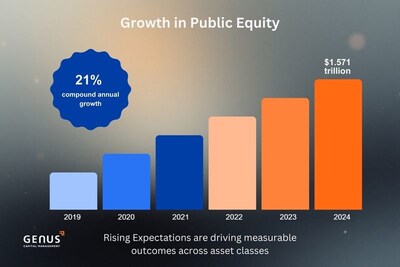
Global impact investing assets have reached approximately $1.6 trillion USD1. As the market expands, however, investors face mounting challenges. It has become more difficult to assess the social and environmental impact of investments amid varied methodologies, inconsistent data, and divergent reporting standards. At the same time, communicating impact clearly to end clients has become more challenging as regulatory requirements tighten and expectations around disclosure increase2.
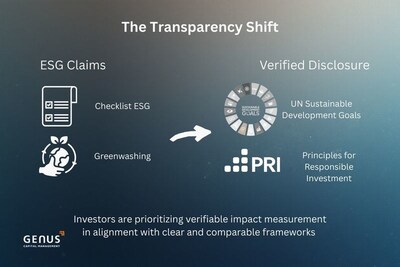
Market signals suggest a shift away from broad ESG categorizations toward outcome-based assessment, driven in part by regulatory guidance and investor demand for verifiable, decision-useful information. Frameworks such as the United Nations Sustainable Development Goals (SDGs) and guidance from the UN Principles for Responsible Investment (UNPRI) are increasingly used to anchor impact claims, but translating these frameworks into clear, comparable portfolio-level insights remains a persistent challenge3-4.
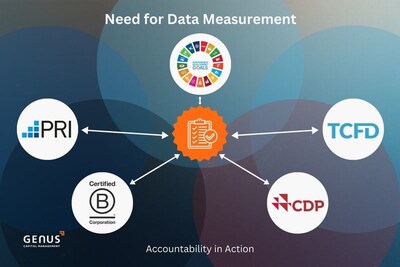
Operational accountability has also come into sharper focus. Climate-related disclosures aligned with the Task Force on Climate-Related Financial Disclosures (TCFD) and reporting through the Carbon Disclosure Project (CDP) indicate rising expectations for asset managers to demonstrate alignment not only through investment selection, but through internal practices such as emissions measurement, governance, and energy sourcing5-6. These pressures further complicate how impact is measured, managed, and communicated.
In response to these challenges, market participants are increasingly prioritizing standardization and comparability. Alignment with recognized disclosure frameworks and third-party certifications, including TCFD, CDP, UN SDGs, UNPRI, and B Corp standards, is becoming a baseline expectation in investor due diligence7. Still, the industry continues to grapple with how to synthesize this information into insights that are accessible, defensible, and meaningful for clients.
Public-market impact strategies illustrate both the opportunity and complexity facing investors. Research from organizations such as the Global Impact Investing Network (GIIN), the OECD, and the Climate Bonds Initiative shows growing interest in listed equities and fixed income instruments that incorporate formal impact methodologies and externally verified impact bonds8. Yet translating company-level disclosures into portfolio-level impact narratives remains an area of ongoing development.
Capital allocation trends continue to concentrate in priority areas such as renewable energy, sustainable transportation, affordable housing, Indigenous-led initiatives, and workforce inclusion, reflecting widely recognized transition needs identified by multilateral institutions and impact research bodies9. As capital flows into these sectors, the ability to consistently measure and communicate outcomes becomes increasingly important.
Against this backdrop, one approach gaining traction is the use of integrated impact measurement frameworks designed to assess both positive and negative impacts at the portfolio level. Genus Capital Management applies its Net Impact Score methodology to evaluate how investments contribute to—or detract from—defined social and environmental outcomes, with the aim of supporting clearer analysis and more transparent communication on behalf of clients.
What This Means
Impact investing is no longer defined by intent alone. As the market grows and regulations tighten, investors face greater difficulty in understanding how impact is measured and in communicating those outcomes clearly to clients. The trends outlined above point to an industry moving toward more structured, data-driven approaches that emphasize transparency, consistency, and accountability. In this environment, methodologies that can translate complex impact data into clear, defensible insights—while accounting for both positive and negative effects—are becoming increasingly important.
For a more detailed market analysis—and to learn how Genus approaches impact measurement on behalf of its clients—read more in the 2024 Impact Report.
Footnotes / Sources (Hyperlinked)
- Global Impact Investing Network (GIIN), Sizing the Impact Investing Market
https://thegiin.org/publication/research/sizing-the-impact-investing-market-2024/ - CFA Institute, ESG Disclosure Standards for Investment Products
https://rpc.cfainstitute.org/sites/default/files/-/media/documents/ESG-standards/Global-ESG-Disclosure-Standards-for-Investment-Products.pdf - United Nations, Sustainable Development Goals (SDGs)
https://sdgs.un.org/goals - UN Principles for Responsible Investment (UNPRI), Impact Measurement and Management
https://www.unpri.org/responsible-investment/intro-guides/what-is-responsible-investment - Task Force on Climate-Related Financial Disclosures (TCFD), Recommendations and Reports
https://www.fsb-tcfd.org/publications - Carbon Disclosure Project (CDP), Climate Change Disclosure Reports
https://www.cdp.net/en/research - B Lab, B Corporation Certification Standards
https://www.bcorporation.net/en-us/standards - Climate Bonds Initiative; The $4.4tn Climate Investment Opportunity
https://www.climatebonds.net/files/documents/publications/4.4-trillion-Investment-Opportunity-03A.pdf - World Bank; OECD; GIIN, Global Impact Investing Priorities
https://www.worldbank.org/en/topic/financialsector
https://www.oecd.org/dac/financing-sustainable-development
https://thegiin.org
SOURCE Genus Capital Management

